What Is a UGC Content Creator? Definition, Salary & How to Become One (2026)
The UGC content creator profession has matured since 2023, driven by demand from DTC brands for video formats that look like authentic customer content.
Rates in the US currently range from $50 to $3,000 per video, depending on experience and the rights being licensed.
This article covers the definition of the role, the income observed across the US market, the six steps to launch as a UGC creator, and the process ecommerce brands use to identify, hire and brief creators.
What is a UGC content creator?
UGC stands for User-Generated Content.
A UGC content creator is a professional who produces video content designed to look like spontaneous user content, but commissioned by a brand under a paid agreement.
In practice, they film short vertical videos on a smartphone, without a polished ad script or studio setup. The brand acquires those videos to run them as paid social ads on Meta and TikTok, embed them on product pages, or include them in email sequences.
The distinction with an influencer matters. A UGC creator sells content, not an audience.
A creator with 200 followers can charge $500 per video. The value being purchased is the ability to produce an authentic, high-performing format, independent of the creator's organic reach.
UGC creator vs influencer: the actual difference
The two roles are often confused. They follow different commercial logics.
- Influencer : paid for their reach. The brand buys access to their audience. Content is posted on the influencer's account. Pricing depends on follower count and engagement rate.
- UGC creator : paid for their content. The brand buys usable video assets. Content runs on the brand's channels or in paid ads. Pricing depends on the quality of the deliverable and the rights being licensed.
A UGC creator doesn't need to post on their own account. They deliver the files, the brand uses them per the contract terms. That's why creators with under 1,000 followers can make a living from the work, while 100,000-follower accounts often struggle to monetize.
What does a UGC content creator actually do?
A UGC creator produces short vertical videos without a costly production setup. Four formats account for the majority of briefs in 2026.
The 4 video formats they shoot
Unboxing: The creator films the package being opened in real time: the reveal, the first impression, the first contact with the product. Especially strong in beauty, fashion and lifestyle, where packaging is part of the product experience.
Product testimonial: The creator talks directly to camera about their experience with the product. No script, conversational register. Universal format that works across most verticals.
How-to and tutorials: The creator demonstrates the product in use within their routine. "My morning skincare routine with [product]", "How I style this jacket three ways". Particularly effective for products where the value sits in the usage.
Lifestyle: The product appears naturally in the creator's daily life, with no explicit demonstration or pitch. The hardest format to execute well, but the most viral when it lands, because it sells a lifestyle attached to the product.
Typical UGC deliverables
A standard order usually includes:
- One vertical 9:16 video, 15 to 60 seconds long
- Raw footage (unedited rushes)
- 1 to 3 hook variants — the first three seconds, which determine completion rate
- Per contract: 1 to 5 videos per product, with message variations
Average delivery window: 5 to 10 days from product receipt by the creator.
How much do UGC content creators get paid?
Rates vary meaningfully based on experience, rights licensed and segment.
Below are the ranges observed in the US market in 2026.
Rate ranges by experience (in $)
- Beginner (under 6 months, limited portfolio): $50 to $200 per video
- Intermediate (1 to 2 years, solid portfolio, defined niche): $200 to $800 per video
- Confirmed (2+ years, recognized brands in portfolio): $800 to $3,000 per video
- Top 5% (creators with a strong personal brand or highly specialized expertise): $3,000 to $5,000+ per video
What drives the variation
Four levers heavily influence the final rate.
- Usage rights. A video licensed for organic use only — on the brand's own channels — costs less than a video cleared for paid ads running for 12 months. Licensing paid-media rights typically multiplies the rate by 1.5 to 3 times.
- Exclusivity window. If the brand requires exclusivity (no working with a direct competitor for X months), expect a 30% to 100% premium on the base rate.
- Raw footage. Including raw footage with the edited deliverable justifies a 20% to 50% premium. Most brands request it so they can re-cut or repurpose internally.
- Number of variants. Producing multiple hook variations for A/B testing in paid social adds roughly 30% per additional variant.
Monthly income observed in the US
The ranges seen across the US market:
- Beginner working part-time: $800 to $2,500 per month
- Intermediate full-time: $4,000 to $8,000 per month
- Confirmed full-time: $8,000 to $15,000 per month
- Top 10% of UGC creators: $15,000+ per month
These figures are gross revenue before taxes and business expenses. As a 1099 contractor, plan for federal and state income tax (varies by state), plus 15.3% self-employment tax on net earnings. Quarterly estimated tax payments are required.
How to become a UGC content creator: a 6-step playbook
The role has no formal entry requirement. No degree, no pre-existing network. That said, creators who reach a sustainable income tend to follow the same progression.
1. Pick a niche
Specialization significantly increases the rate at which you sign contracts. Brands look for creators whose profile resembles their target customer.
Niches that pay well in 2026: skincare, fitness, supplements and wellness, parenting, fashion, consumer tech, home decor.
Combining two complementary niches (skincare + motherhood, for example) opens access to ultra-specific briefs where competition is thin.
2. Build a portfolio of 3 to 5 videos
No brand hires a creator without seeing their work first. Before any outreach, you need to produce 3 to 5 videos for products you already own.
The recommended method: pick 3 brands you use daily, produce one video for each as if it were a paid commission, edit them, and group everything in a shareable Google Drive folder or Notion page.
Those videos aren't wasted: you can pitch them to the brands in question and offer to license the rights for a fee. That's often a creator's first paid deal.
3. Minimum gear (around $250)
Professional equipment isn't necessary to start:
- A recent smartphone (iPhone 12 or later, or a high-end Android equivalent)
- A Boya BY-M1 lavalier microphone (around $25). Audio quality is the main marker between professional and amateur UGC.
- An 18-inch ring light (around $35)
- A flexible Gorillapod-style tripod (around $30)
- CapCut for editing — free
Total investment: $250 or less. This setup is usually recouped on your first paid video.
4. Set a rate sheet
A common mistake is underpricing in an attempt to "build confidence". This locks the creator into a segment of clients who don't pay well, and makes future rate increases difficult.
A clearer approach is to define a rate sheet upfront, aligned with market ranges:
- 1 video, organic rights for 6 months: $200
- 1 video + raw footage + 2 hooks: $325
- 1 video + paid-media rights for 12 months + 30-day exclusivity: $500
This rate sheet acts as a natural filter and screens out brands unwilling to pay fair market value.
5. Join UGC marketplaces
Marketplaces take a 10% to 30% commission but give access to a steady flow of briefs without outbound work:
- Billo : one of the largest US-focused UGC platforms. High brief volume across beauty, supplements and ecommerce DTC.
- Insense : strong on paid-ads creators. Many beauty and CPG briefs, particularly suited to TikTok and Meta ads.
- Influee : 10,000+ creators in the US, international reach, well-suited to higher-volume programs.
- JoinBrands : popular with mid-market DTC brands. Briefs span unboxing, testimonial and tutorial formats.
- TRIBE : international marketplace, briefs from large advertisers, more selective creator approval.
Most established creators sign up on 2 to 3 marketplaces in parallel, especially in the first months.
6. Pitch brands directly
The highest-paying contracts rarely come from marketplaces. They come from outbound to brands.
A method that works: identify 10 DTC brands in your niche that already run UGC ads on Meta. The Meta Ads Library lets you filter active ads by type and surface the ones using UGC.
Send a direct message on Instagram or a professional email, structured around three elements:
- A short sentence describing what you do
- A link to your portfolio
- A specific video proposal tailored to the brand
Observed reply rate: 5% to 15%. Out of 10 brands contacted, you typically close one to two deals.
How ecommerce brands hire and brief UGC content creators
For a brand looking to integrate UGC into its growth strategy, the operational process breaks down into three steps: identify creators, write the brief, deploy the resulting videos.
Where to find UGC creators
Three main channels, ordered by increasing cost per video:
Social listening. Before commissioning a UGC creator, check whether your own customers are already posting content for free. A social listening tool surfaces every video where your brand is mentioned or tagged on TikTok and Instagram. You request usage rights, then repurpose the content with zero production cost. This is the preferred entry point for brands that already have an active customer base.
UGC marketplaces. For brands without an established community, the platforms above (Billo, Insense, Influee, JoinBrands) let you post a brief and receive creator applications within 24 to 48 hours. You pay per deliverable, typically $80 to $400 per video depending on the quality tier.
Direct outreach. Identifying UGC creators on TikTok and Instagram — "UGC creator" often shows up in their bio — lets you reach out directly. The process takes longer but builds long-term relationships with creators who fit the brand.
Anatomy of a brief that produces strong results
A vague brief produces a mediocre video. An effective brief fits on one page and consistently includes:
- The product : photos, link to the product page, a sample or promo code sent to the creator
- The customer benefit : one sentence, not a paragraph. "This product solves problem X for customer Y"
- The target audience : a single line describing who the video speaks to
- Two or three reference videos : examples close to the intended output, including videos produced for other brands
- The hook angle : example, "Start with the after-result before showing the product"
- Exact deliverables : runtime, format, number of variants, raw footage included or not
- Rights granted : organic use, paid media, duration, exclusivity window
Where to deploy UGC videos on your site
Confining UGC video to a Meta Ads campaign underuses the asset. Three placements maximize return:
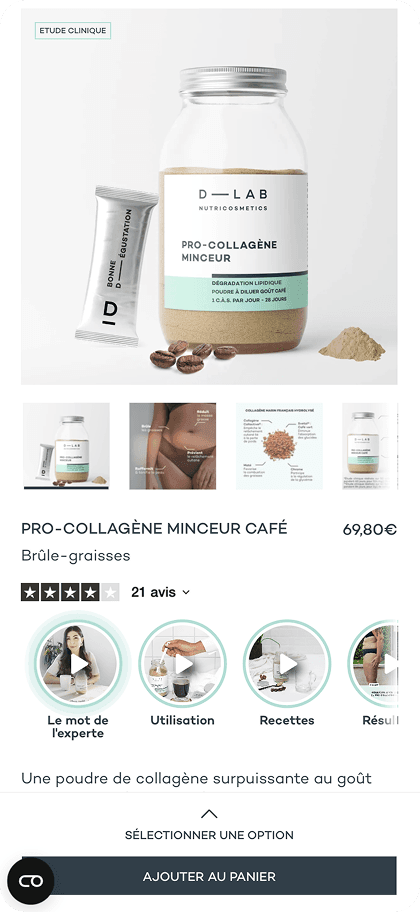
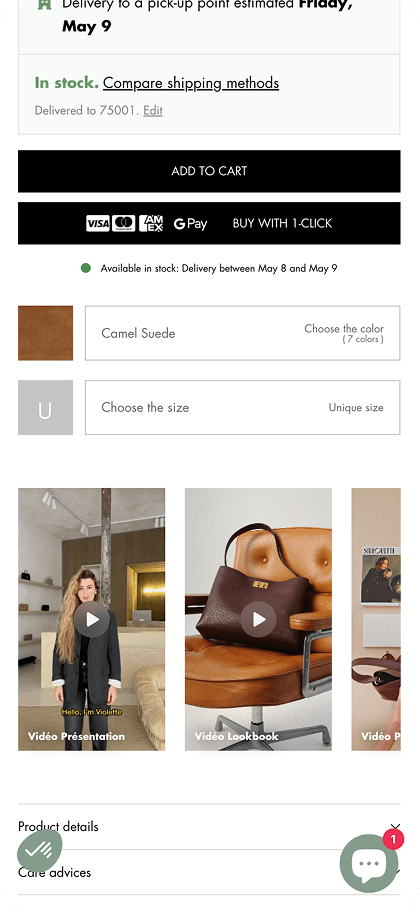
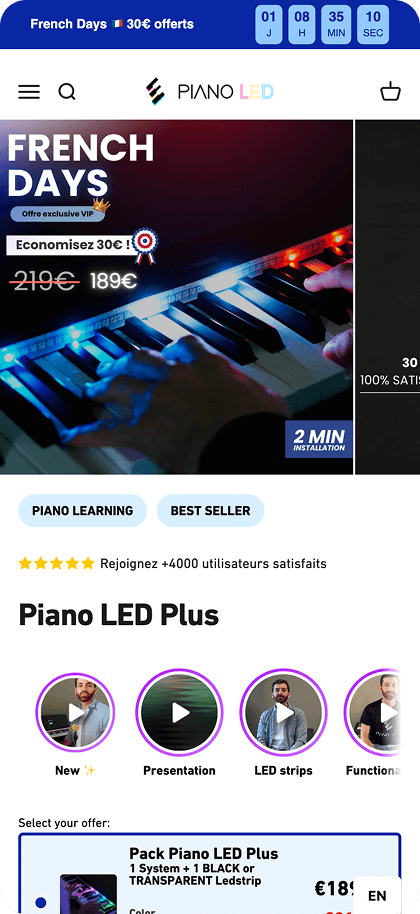
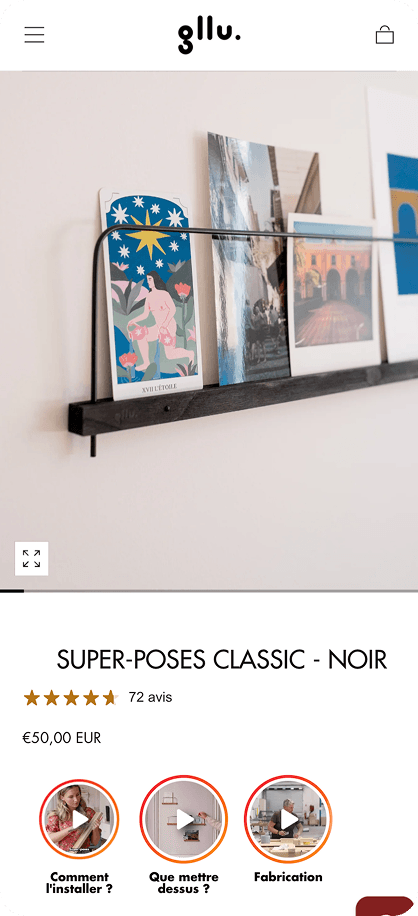
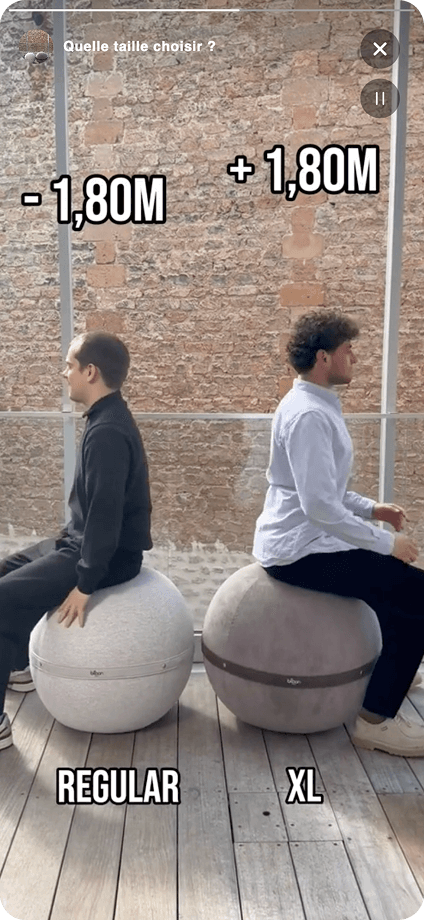
- The product page. The highest-ROI placement. Embedding a UGC video below the product title lifts conversion rate by an average of 8.5%. Our guide on product page video covers the implementation details.

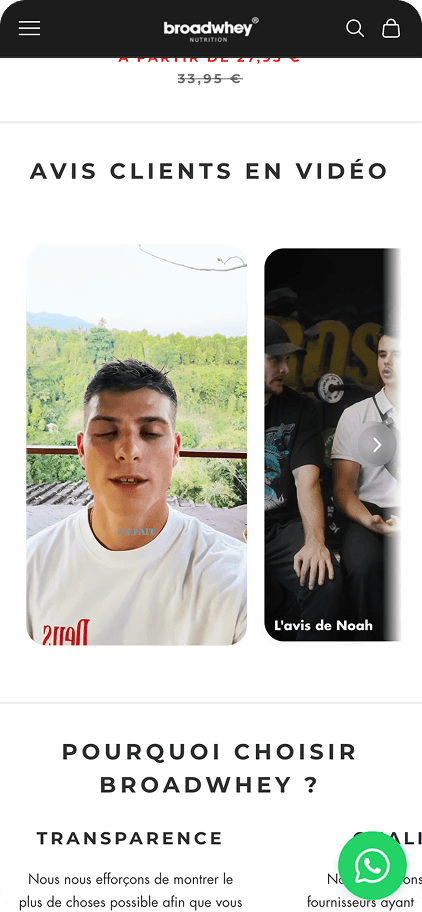
- The homepage. As a carousel of customer videos, this creates immediate social proof for first-time visitors discovering the brand.

- Post-purchase emails. Embedding a UGC video in an email sequence keeps existing customers engaged and drives repeat purchases.

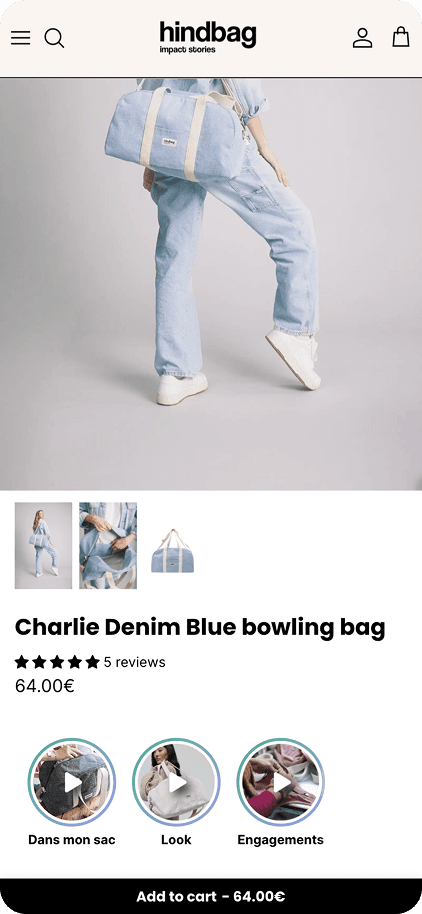
The brand Hindbag generated $200,000 in additional revenue with a 9.6% conversion rate by combining UGC video on product pages with automated collection through social listening.
Paid UGC creator vs organic UGC: which strategy?
Brands often frame the two as a tradeoff. They shouldn't. The two approaches are complementary.
Organic UGC, produced spontaneously by customers, is free and perceived as fully authentic. Its main limitation is that it doesn't scale on demand — the brand depends on the natural output of its community.
Paid UGC creators let you commission a specific format, angle or demonstration. The cost sits between $80 and $500 per video depending on quality.
Brands that scale the fastest combine both:
- Social listening to continuously collect organic UGC from the existing customer base
- Paid UGC creators for specific briefs: new product launch, opening a new audience segment, a precise format engineered for Meta Ads
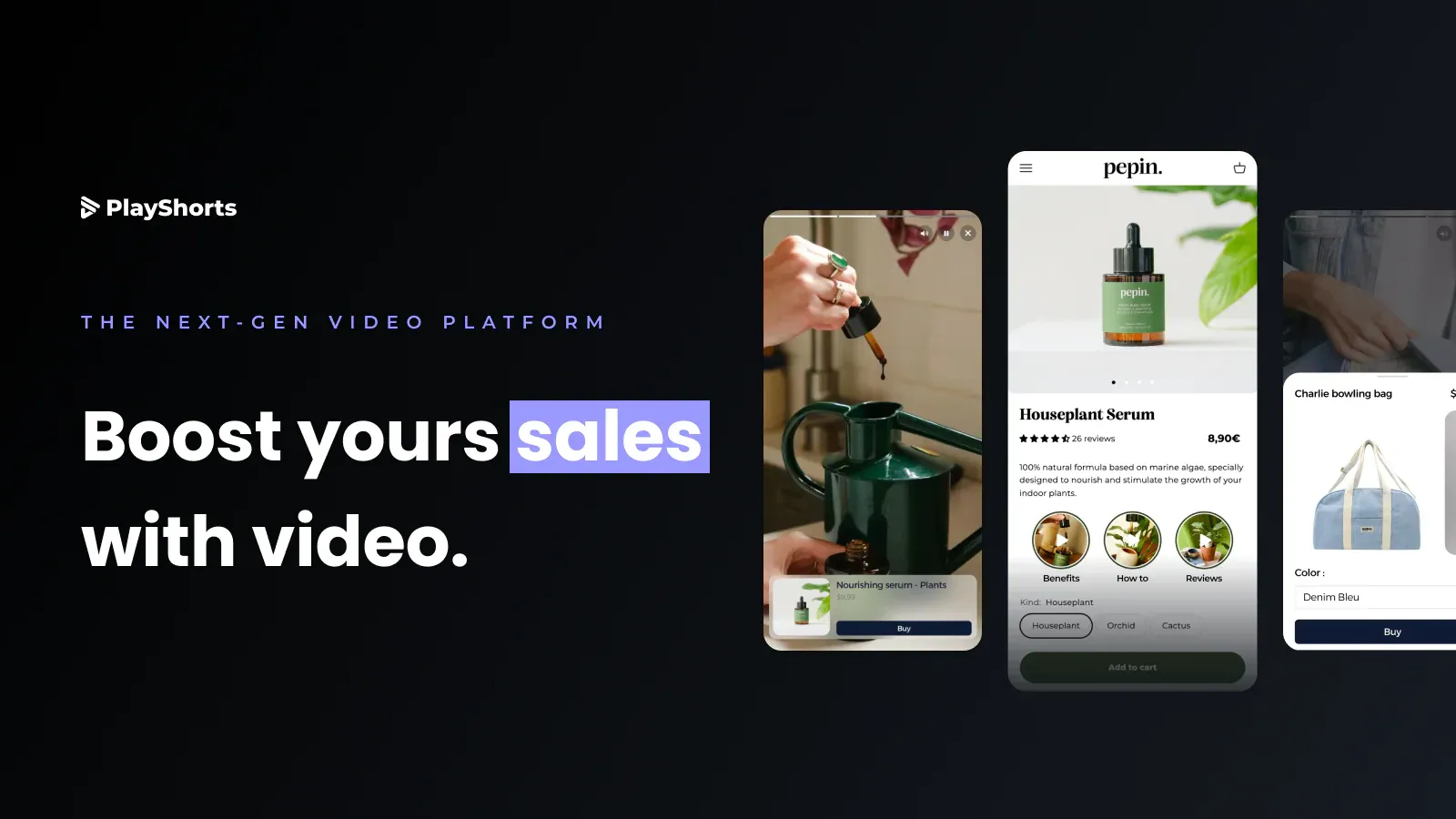
PlayShorts is built around this hybrid model: automated collection of organic UGC from your existing customers, one-click rights requests, and an integrated workflow to brief paid UGC creators in parallel. The resulting content is deployed across product pages, the homepage and email sequences in minutes.
UGC content creator FAQ
Do you need followers to become a UGC creator?
No. The majority of UGC creators who make a living from the work have fewer than 1,000 followers. The criterion that matters is the quality of the videos you produce for brands, not the size of your personal audience. Brands acquire the videos to run on their own channels.
Can the work be done part-time?
Yes — that's how most creators get in. A single video takes 2 to 4 hours of work (shooting and editing). At $250 per video, four videos a week generates $4,000 in monthly revenue for roughly 12 hours of weekly work.
Is professional equipment required?
No. A recent smartphone, a lavalier mic and a light source are enough. UGC content is meant to look like user content. Equipment that's too polished makes the production immediately readable as advertising, which crashes performance.
How long until you can earn a full-time income?
Expect 3 to 6 months to reach $2,000 to $4,000 per month. Then 6 to 12 months to go full-time at $5,000 to $8,000 per month. Creators who scale faster usually have a specific edge: highly specialized expertise, a pre-existing personal brand, or a professional network that opens doors to brands.
Do UGC videos actually outperform studio ads?
Yes. On Meta Ads, UGC videos show a cost per acquisition 30% to 50% lower than studio ads. On product pages, embedding UGC video lifts conversion rate by 8% to 15% on average. The drivers: perceived authenticity, and a native fit with the format of social feeds.
What rights do you license to brands?
Three standard models:
- Organic rights only : the brand can use the video on its owned channels (site, social accounts). Typical duration: 6 to 12 months.
- Paid-media rights : the video can be run in paid ads on Meta, TikTok, YouTube Ads. Costs 1.5 to 3 times more than organic rights.
- Exclusive rights : for a defined period, the creator agrees not to work with a direct competitor. Premium: 30% to 100% over the base rate.
Always sign a written agreement or purchase order specifying those rights upfront.
Do you need to set up a business entity in the US?
Most US-based UGC creators start as sole proprietors filing income on a Schedule C — no formal registration required. As revenue grows, switching to an LLC (or S-corp election at higher income) becomes attractive for liability protection and tax planning. Expect to file quarterly estimated taxes once you earn meaningful income, and to apply for an EIN if you go the LLC route. A CPA is worth the investment beyond $50,000 in annual revenue.
Read more
To understand which UGC video formats perform best, see what is a UGC video and our 6 UGC video formats that convert.
From a brand standpoint, the secrets of an ecommerce video that converts and our guide on where to place videos on your ecommerce site cover implementation and distribution best practices.