How to integrate a video carousel on your ecommerce site?
Integrating video on ecommerce sites is no longer optional, it's become essential.
With rising acquisition costs, optimizing your conversion rate is the most effective way to increase your sales.
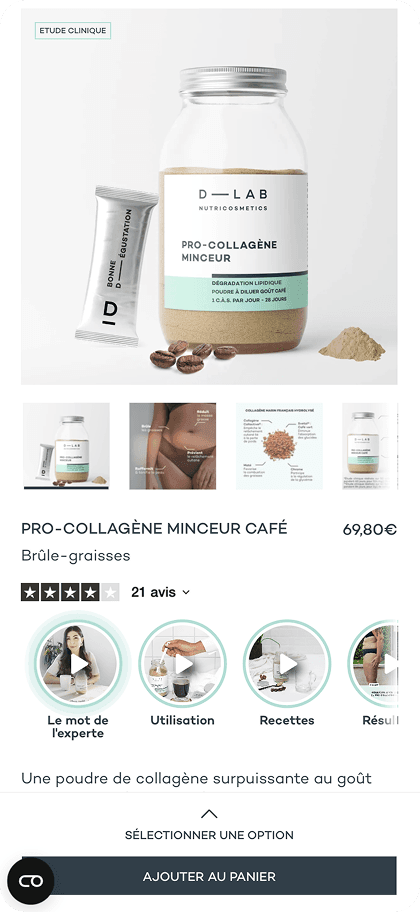
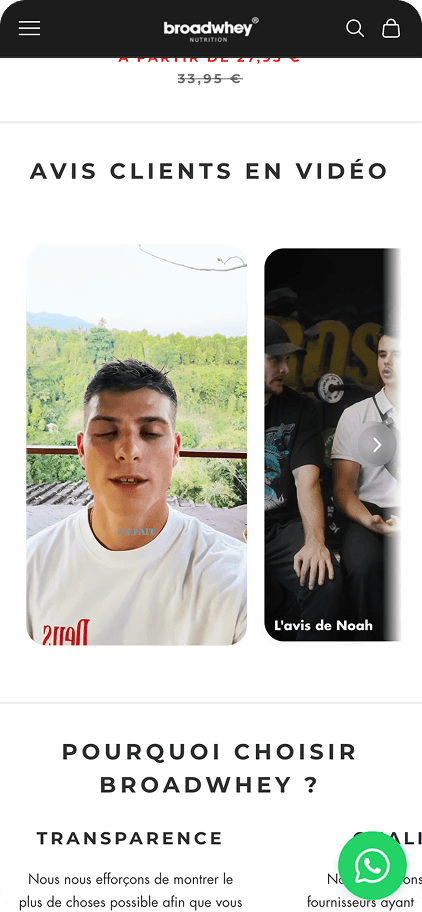
Video carousels provide a smooth and attractive experience, similar to that of social networks, directly on your product pages or homepage.
With PlayShorts, you can easily implement this feature to capture your visitors' attention and turn them into buyers.
Step 1: Have video content
To integrate a video carousel on your ecommerce site, start by auditing your existing media library.
The objective is simple: offer sequences that reassure your visitors and remove psychological barriers to purchase.
In a B2C context, visuals remain the primary information vector: 68% of consumers prefer watching a short video to learn more about a product or service rather than reading an article.
Don't limit yourself to one format. Diversify your video types to address different information needs throughout the customer journey.
Here are the essential formats to integrate into your video carousel:
- Unboxing Videos: show the packaging and unboxing experience. This is a moment of truth for customers that allows them to envision product ownership.
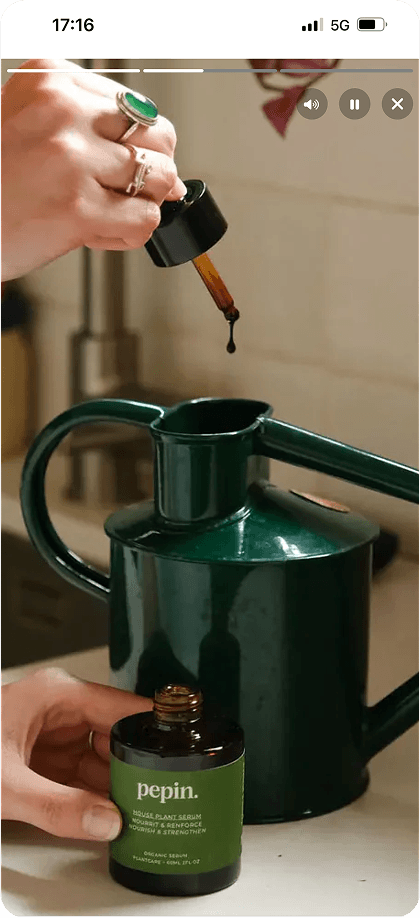
- Product Demos: validate features and real usage of the item. For software or technical equipment, a 30-second demo is worth more than complex technical documentation.
- Before / After: effective proof, especially for cosmetics, cleaning products, or renovation solutions. This visual format demonstrates immediate effectiveness.
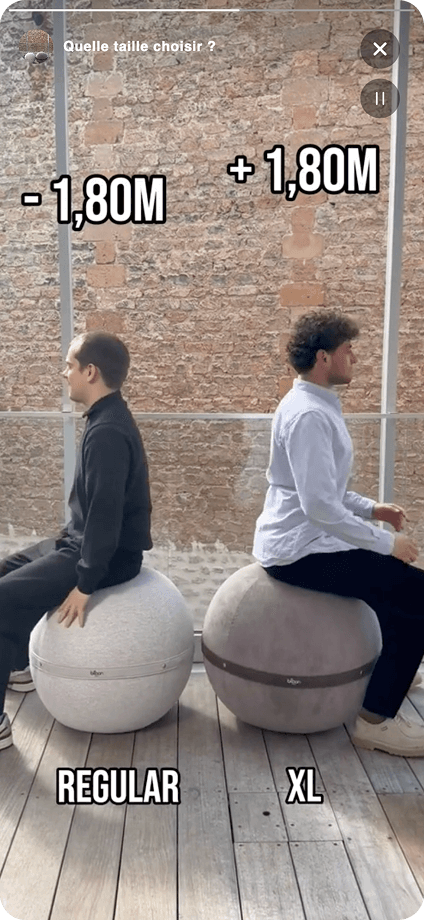
- Video FAQ: answer recurring questions to address objections (size, assembly, compatibility).
- Key Benefits: short capsules focused on your offer's added value, ideal for capturing attention in under 10 seconds.
Creating this content can be quick internally; a smartphone is enough to produce authentic, high-quality images. The 'raw' aspect, less polished than TV ads, is often perceived as more honest by consumers.
However, the unexploited goldmine often lies with your own customers. You can leverage existing content through PlayShorts's UGC Search feature.
It allows you to identify and reuse content created by your customers on social networks like Instagram or TikTok. These social proofs provide peer validation that strongly influences purchase decisions.
Step 2: Create your video project
Once your video files are gathered, structure your project within the PlayShorts platform.
Start by creating multiple stories and name them explicitly.
Organize your stories by theme (for example 'Customer Reviews', 'Benefits', 'FAQ') to facilitate customer navigation and make their journey simpler.
With PlayShorts, you can add multiple videos to one story.
Concretely, this allows you to chain multiple videos in the same story, creating a complete narrative sequence without the user having to click to continue.

Step 3: Integrate CTAs in your videos
To maximize ROI from your video carousel, guide users toward the next action.
Integrate CTAs (Call to Action) in your videos to make the experience more interactive and shorten the conversion funnel.
Two CTA strategies are available, choose based on carousel placement and page objective:
- Redirect CTAs: These buttons send your customer to the corresponding product page or specific landing page. This is the ideal choice when your video carousel is located on the homepage, collection page, or even in a blog article.
- Use case: a 'Lookbook' video presenting multiple outfits. The 'See product' CTA redirects users to the page of the item shown on screen.
- Objective: increase qualified traffic to product pages and improve internal linking.
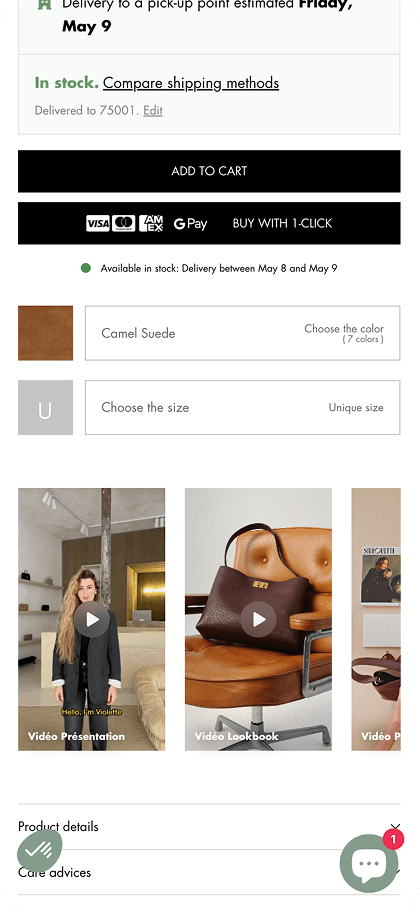
- Add-to-Cart CTAs: This is the ultimate weapon for immediate conversion. This button allows adding the presented product directly to cart without leaving the video viewing window.
- Use case: on a product page, a demonstration video convinces the user. The 'Add to cart' button appears, enabling instant impulse purchase.
- Objective: reduce friction and clicks needed to validate an order.
Integration of these buttons must be visible without masking essential video content.
With PlayShorts, you can customize button text to align with your brand tone.

Step 4: Design
Visual integration matters greatly for your ecommerce site's credibility.
A polished design that respects your store's brand guidelines strengthens perception of quality and professionalism.
PlayShorts offers advanced customization so the tool blends naturally into your interface. The objective: deliver a native result - content should look like an intrinsic site feature, not an external addition.
Mobile vs Desktop distinction: Think about distinguishing mobile experience from desktop experience. Navigation behaviors are radically different:
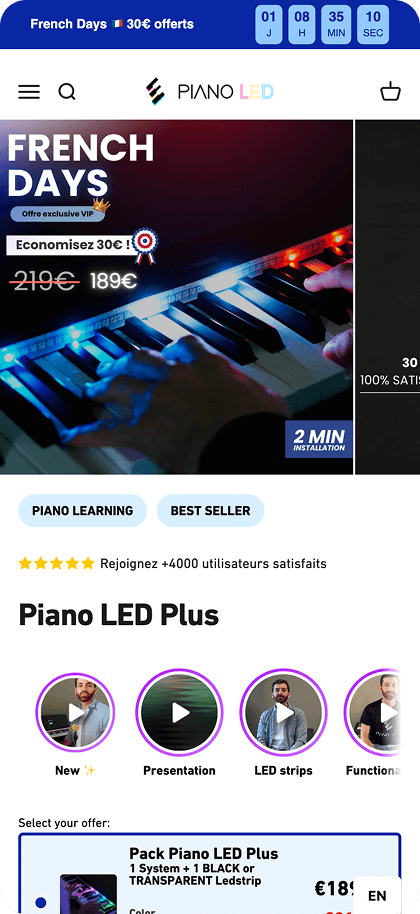
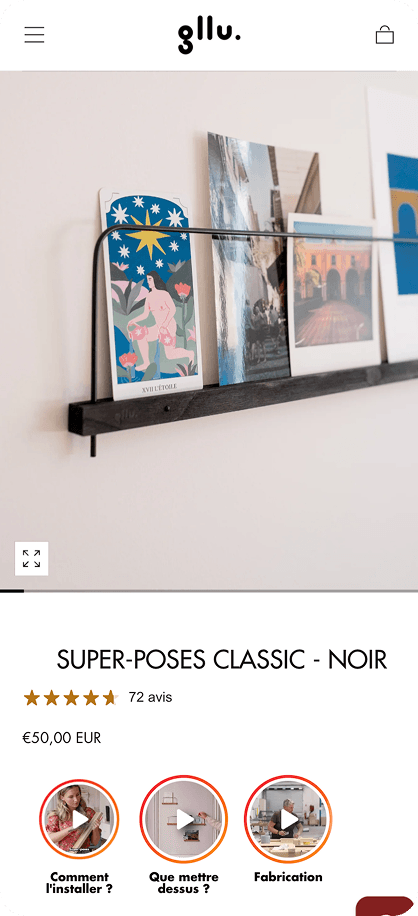
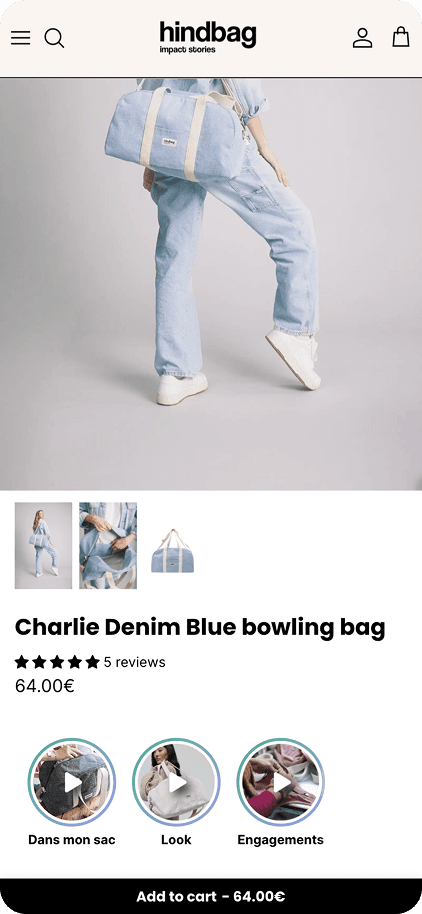
- On Mobile: users are used to vertical format (9:16) like 'Stories'. The carousel should occupy prominent space but allow easy scrolling. Round thumbnails (Instagram style) at page top work particularly well.
- On Desktop: the screen is wide. A rectangular format or video grid often integrates better in side columns or at bottom of product pages.
Customization parameters: Use available settings (colors, typography, border shapes) for native integration.
- Colors: align border colors of unviewed stories (often red or purple by default on social networks) with your brand's primary color.
- Typography: import your own fonts so video titles are identical to your product titles.
- Shapes: opt for square, round, or rectangular thumbnails based on your buttons and product images design.
The player should seem like an integral part of your ecommerce solution, whether you're on Shopify, PrestaShop, or a custom solution.
This promotes user interactions and engagement. Successful integration is invisible integration: visitors shouldn't think 'this is a widget', but 'this is a product video'.

Step 5: Integrate the script
Once design is validated, the technical step of script integration is often dreaded by marketing teams, but it's been simplified to the extreme by modern solutions like PlayShorts.
The challenge here isn't just displaying video, but doing so without degrading your site's technical performance (Core Web Vitals).
Visual integration matters greatly, but technical performance is the foundation of your SEO. A poorly optimized script can slow loading time, which penalizes your Google ranking and increases bounce rate.
PlayShorts uses asynchronous loading technology: this means the video carousel loads after critical page elements (text, main images). Thus, user experience remains smooth and immediate.
Simplified integration procedure:
- Code generation: from your dashboard, after configuring your videos and design, you get a script to paste on your site.
- Insertion: simply copy-paste this script into your site's HTML code, exactly where you want the carousel to appear.
- On Shopify: via theme editor, in a 'Custom Liquid' section.
- On PrestaShop or Magento: via HTML module or directly in template files (.tpl).
- On WordPress/WooCommerce: via HTML block.

Step 6 - Track your KPIs
Integration is just the beginning. To maximize your return on investment, drive your video strategy with data through our analytics dashboard.
Track concrete business metrics related to your activity:
- Engagement rate: this is the percentage of visitors who click on video compared to total page visitors.
- Analysis: if this rate is low (under 2-3%), review carousel placement (is it too low?) or thumbnail (is it enticing enough?).
- Hook performance: analyze retention on the first 3 seconds. This is where everything is decided.
- Analysis: if you lose 50% of your audience before the 3rd second, your intro is too long or not relevant enough. The hook must be punchy or emotional.
- Video engagement: average viewing time and completion rate.
- Analysis: this KPI is often correlated with strong purchase intent. A user who watches a product demo to the end is a hot prospect.
- Post-view conversion rate: percentage of users who purchased after watching a video.
- Analysis: this is the ultimate judge. Compare conversion rates of visitors 'with video view' vs 'without video view'.
Adopt an iterative approach: Ecommerce is experimental science. Identify performing formats (for example, 'Customer Reviews' videos might convert better than 'Lifestyle' videos) and adapt your future production.
Test different calls to action, change video order in the carousel, and measure impact.
FAQ
What exactly is a video carousel?
A video carousel is an interactive module integrated into a website that displays a series of short videos (vertical story or square format) that users can scroll through. Unlike a classic YouTube player, it's designed for quick discovery and purchase (shoppable video).
Will a video carousel slow down my site?
No, if you use an optimized solution like PlayShorts. Videos are hosted on high-performance external servers and the script loads asynchronously, meaning it doesn't block display of the rest of your page. Impact on PageSpeed scores is minimal.
What's the ideal duration for a video in a carousel?
Conciseness is key. Aim for 10 to 30 seconds per video. Short formats maintain attention. If you have a lot to say, break content into multiple sequences (multi-videos per story) rather than making one long video.
Should I use sound in my videos?
Yes, but ensure the video is understandable without sound. Use subtitles or text overlays to convey key messages, as many users browse in silent mode, especially on mobile.
Can I reuse my TikTok or Reels videos?
Absolutely. It's even recommended. This content is already formatted for engagement (9:16 vertical format). PlayShorts makes importing this media easy. Just ensure you have rights if using commercial music or influencer content.
Where should I place the video carousel on my site?
Strategic placements are:
- Homepage: to present the brand or new collections (top of page).
- Product page: for demos, size guides and customer reviews (near add to cart button).
- Landing pages: to maximize conversion on specific offers.
What's the difference between an image carousel and video carousel?
An image carousel is static and passive. A video carousel is dynamic, captures attention better (movement attracts the eye) and transmits much more information in less time. Conversion rates are systematically higher with video.
Read more
The video carousel is one of the most effective formats, but there are other strategic placements. Check our complete guide on where to place videos on your ecommerce site to maximize conversions at every stage of the buyer journey.
The web story format is an immersive alternative to carousels, ideal for product pages. You can also create video pop-ups on your homepage to welcome visitors with dynamic content.