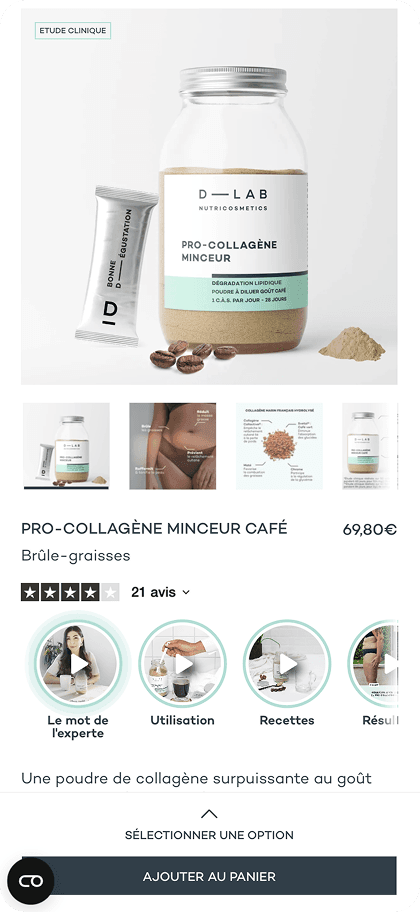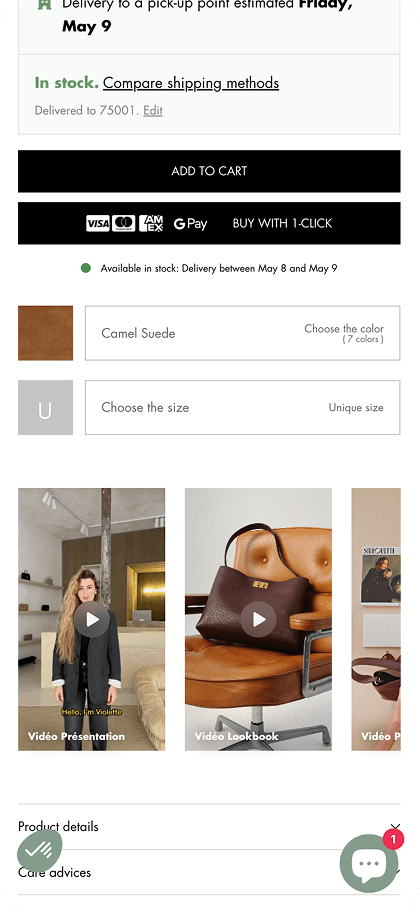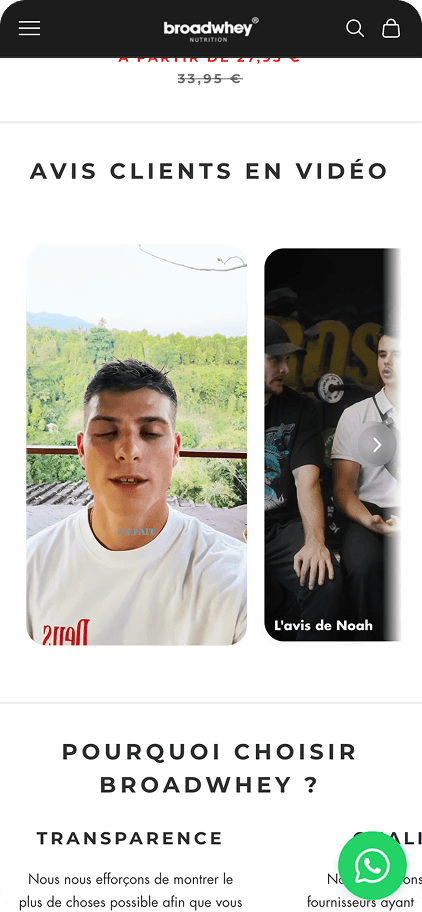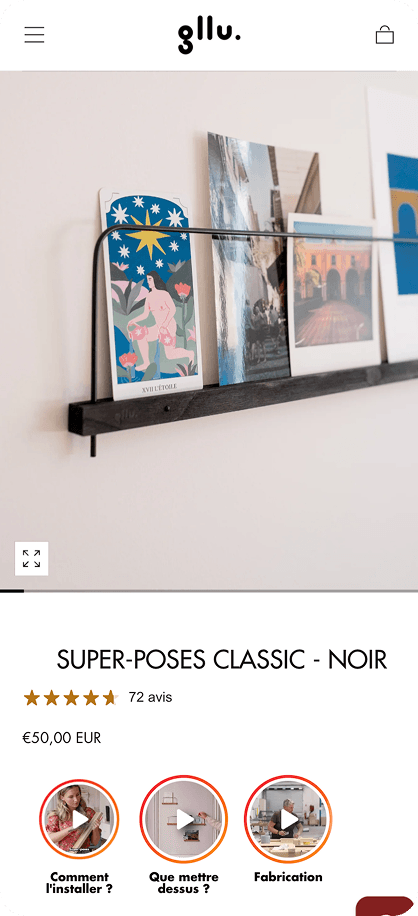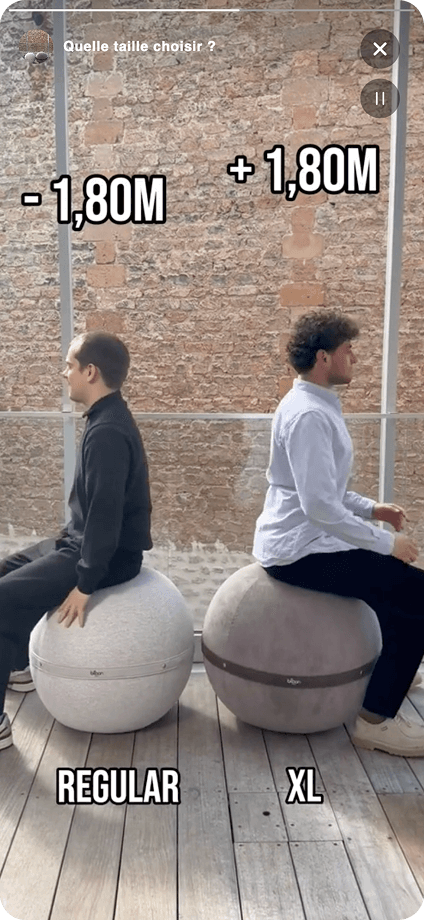
If you have an e-commerce site and are looking to increase your sales, you absolutely must understand the concept of web stories. Inspired by the format popularized by Snapchat and then adopted by Instagram, Facebook or WhatsApp, the concept of "story" is now well anchored in user habits.
Web Stories, what exactly are they?
Web Stories are a content format inspired by social media stories like Snapchat, Instagram, Facebook or WhatsApp, but designed specifically for the web.

Definition and principles
Like the "highlights" stories on these platforms, they can be integrated directly on your site, for a smooth and immersive user experience. Launched by Google in 2018 under the name AMP Stories (AMP for Accelerated Mobile Pages), this format was initially designed to optimize mobile navigation.
Today, Web Stories have become a real communication lever. They allow you to capture attention quickly, present content in a more visual and interactive way, while responding to new consumption patterns, where short video occupies an increasingly central place.
For e-commerce merchants, this format revolutionizes customer interaction by capturing the attention of visitors accustomed to "short content". They allow you to broadcast complex information (product demonstrations, testimonials, brand behind-the-scenes) in an engaging way.
The challenge is significant: adapting the e-commerce site to new information consumption standards.
Web Stories vs social media stories: understanding the essential differences

Web Stories are not temporary
Unlike stories on social media, Web Stories are not ephemeral: they remain visible as long as you want on your site, and do not disappear after 24 hours.
They can be integrated on any page of a website
Web Stories can be freely integrated on any page of your e-commerce site: homepage, product pages, blog, and many others. This flexibility allows you to enrich the user experience with video content where it is most relevant, without being limited to a fixed location like on social media.
Web Stories are not linked to your social media
These web stories are not connected to your social media, which means that the content you broadcast there does not need to be published on your social media to appear on your site. You can thus create videos specifically designed for your e-commerce site, adapted to your objectives and your audience.
They can include links, CTAs, quizzes, polls, etc.
Web Stories offer many features. You can integrate links, calls to action (CTA), quizzes, polls, and much more directly.
In summary, while stories on social media serve to animate a community, webstories are performance tools designed to transform users into customers and improve organic visibility on Google.
The advantages of Web Stories for your e-commerce

Improving user engagement and mobile experience
In a context where more than 70% of global e-commerce traffic comes from mobile, the smartphone experience is crucial. Classic websites, often static and overloaded, struggle to retain attention compared to the fluidity of native apps. Web Stories are a practical solution, with navigation designed for the thumb.
The full-screen display removes browser distractions and focuses attention on the product or brand message.
Data shows that this format makes visitors stay 3 to 4 times longer on the site compared to a classic page. This stronger engagement sends a positive signal to algorithms and creates an emotional connection with the brand.
Impact on visibility and natural referencing (SEO)
They help keep the user longer on your site
Web Stories capture the user's attention from the first seconds thanks to their dynamic and visual format.
Fewer bounces, more returns
With such a fluid and immersive format, Web Stories reduce the bounce rate. Visitors clicking on Webstories are less likely to leave your site quickly. As the experience is more captivating, they explore your content more, which improves overall engagement.
They improve user experience (UX)
The user experience (UX) is a direct ranking factor for Google. Webstories, by their immersive nature, encourage visitors to consume more content. Mechanically, this increases the "Dwell Time" (time spent on the page), a strong signal sent to Google's algorithms indicating that your page is relevant and of quality.
Improving your e-commerce conversion rates
Beyond traffic and engagement, the ultimate goal remains the sale. Video is recognized as the most persuasive media: 96% of consumers find videos useful for making an online purchase decision. Web Stories allow you to contextualize the product, show its features in action and remove purchase barriers much more effectively than a gallery of static images.
How to integrate Web Stories on your e-commerce site?
Installing webstories on your e-commerce site
Web Stories integration does not necessarily require a dedicated team of developers or weeks of coding.
The current e-commerce ecosystem favors the use of plug-and-play solutions that interface with your existing CMS.
It is now possible to integrate Webstories on all major e-commerce platforms like Shopify, Prestashop, Woocommerce, Magento or even Wix.
In general, you will need a specialized third-party tool like PlayShorts to manage hosting, distribution and the video player, so as not to burden your own server.
The technical process generally follows these steps:
- Source connection: Import your videos from TikTok, Instagram or your local files to the management platform.
- Widget configuration: Customize the player appearance (colors, bubble shapes, position) so that it harmonizes with your graphic charter.
- Deployment: Insert a piece of JavaScript code in the header of your site or install the official module on your CMS.
This SaaS approach ensures that player updates and technical maintenance are handled by the provider, leaving you to focus on content strategy.
Where and how to use your webstories on your site?
To maximize the impact of Web Stories, their placement must be strategic and correspond to the user's purchase journey. Here are the most effective locations:
- On your product pages
Position the video webstories just below the title to present the product. This dynamic format encourages the customer to learn more about the product in an immersive and attractive format.
- On your homepage
Like Instagram "bubbles", place a story carousel on your homepage. This is ideal for presenting new collections, best-sellers or current offers as soon as the visitor arrives.
- As a pop-up
Use a small floating bubble (widget) at the bottom of the page that opens as a story when clicked. This is an excellent way to push a promotional message or welcome your customer to your site.
- In your emails
Integrate animated previews (GIFs) of your stories in your newsletters. When clicked, the user is redirected to the complete Web Story on your site, thus increasing the click-through rate (CTR) of your email campaigns.
- In QR Codes
For omnichannel strategies, place QR Codes on your packaging or in physical stores that lead to explanatory Web Stories (video instructions, brand story), creating a bridge between retail and digital.
What makes an effective Webstories?
Having a good Webstories integration tool is not enough. The quality and relevance of the content broadcast are determining factors in converting the trial. A high-performing Web Story must be designed for commerce, with a narrative structure that guides the user towards purchase.
Creating Web Stories that convert
The primary objective of an e-commerce Web Story is to create videos that erase barriers to purchase.
Here are some Web Story ideas that are particularly effective for online sales:
- Product demonstration (How-to): Show how the product works, is installed or worn. This reduces uncertainty and potential returns.
- Unboxing: Reproduce the unboxing experience to create desire and show the care taken with packaging.
- Customer reviews in video (UGC): Compile authentic testimonials from satisfied customers. Visual social proof is an extremely powerful trust lever.
- Benefits focus: Rather than listing technical characteristics, visually show the problems your product solves.
To maximize ROI, it is imperative to make your videos shoppable. This means integrating interactive elements (Call-to-Action, product tags) directly on the video.
Choosing the right tools to integrate your webstories
The choice of technical solution determines the performance of your Web Stories and their impact on your site. Not all video players are equal, particularly in terms of speed and user experience.
Here are the essential criteria for selecting your tool:
- Clean and lightweight integration: The tool must not slow down your site. Favor solutions that load scripts asynchronously.
- External hosting: The video must not be hosted on your server (which would consume your bandwidth and slow down the site), but broadcast via the provider's CDN (Content Delivery Network).
- Shoppable features: The ability to tag products and add action buttons is non-negotiable for a merchant site.
- Responsive design: The player must adapt perfectly to all screens (mobile, tablet, desktop) and integrate aesthetically with your graphic charter.
- Ease of use: The management interface must be intuitive for your marketing teams.
In this market, PlayShorts offers one-click integration without technical skills at affordable prices and seems to be a good tool on the subject. The solution combines technical performance (Core Web Vitals compliance) and functional richness (varied widgets, advanced analytics), allowing brands of all sizes to deploy a video strategy
Frequently asked questions about Web Stories
What is a webstories?
These are full-screen visual content, in vertical format, that combine video, images and text, designed to be consumed quickly on mobile directly from a website.
Do webstories impact the speed of an e-commerce site?
No, if you use a solution like PlayShorts. Videos are hosted on external servers and loaded asynchronously, which preserves the performance and Core Web Vitals score of your site.
What is a shoppable video?
It is an interactive video that allows the user to click on the products presented to see details or add them to the cart without interrupting playback or leaving the page.
Is PlayShorts compatible with all e-commerce platforms?
Yes, PlayShorts is compatible with all CMS on the market (Shopify, WooCommerce, Magento, PrestaShop, Wix, etc.) and can also be integrated on custom-developed sites.
Do webstories have a positive impact on SEO?
Because this format captures attention and retains visitors longer, it improves important behavioral signals like time spent on page and bounce rate.
Do webstories have a positive impact on conversions?
By directly showing your products in action (e.g. demonstrations, video reviews, tutorials), you reassure visitors and reduce their doubts, which favors purchase decision-making.
Read more
Web stories are particularly effective on product pages. Learn how to integrate stories on your product pages to boost conversions. You can also combine them with a video carousel on your homepage to maximize engagement from the first visit.
To fuel your web stories with authentic content, leverage UGC videos from your customers. This type of content builds more trust than branded content. And to know exactly where to place videos on your site, check out our strategic guide.