Integrating video into the customer journey is no longer an option—it's a strategic necessity for e-commerce businesses looking to maximize their performance.
As acquisition costs rise, the ability to convert existing traffic becomes the most profitable growth lever.
What is a shoppable video?
A shoppable video is an interactive content format that merges visual entertainment with e-commerce transactional functionality.
Unlike a standard video where viewers must leave the player to search for a product, shoppable video integrates Call-To-Actions directly within the video.
Benefits of shoppable videos
The adoption of shoppable video addresses a need for profitability and user experience (UX) improvement.
Market trends show that consumers prefer videos over text.
Increased engagement and conversions
The most immediate impact of shoppable video is measured on conversion rates.
By allowing users to purchase at the precise moment when their interest peaks (the "love at first sight" moment), brands observe significant results.
According to PlayShorts internal data, integrating this format can generate a conversion rate increase of up to 40%.
Engagement metrics are also positively impacted:
- Time spent on site: Visitors stay an average of 2 to 3 times longer on pages integrating interactive video content.
- Click-through rate (CTR): Interactive elements encourage action much more effectively than a static "Add to Cart" button.
A smooth and dynamic shopping experience for your customers
Online commerce is often complicated: too many clicks, too many pages to load, and there's a disconnect between product discovery (often on social media) and purchase on the website.
Shoppable videos recreate the experience of a physical store, where a salesperson shows the product, explains its benefits, and hands it to the customer.
On the web, this means smooth navigation. You no longer need to remember the name of a product seen in a video to search for it later. Everything is accessible with one click, which greatly reduces cart abandonment due to difficult navigation.
Beyond the numbers, video is a powerful emotional vector. It allows you to tell your brand's story (storytelling) and present your products authentically. Using user-generated content (UGC) or creator videos in shoppable format reinforces social proof.
The best shoppable video examples that generate sales
To visualize the potential of this tool, let's analyze concrete use cases.
Here's how to structure your strategy with a shoppable video example for each key section of your digital ecosystem.
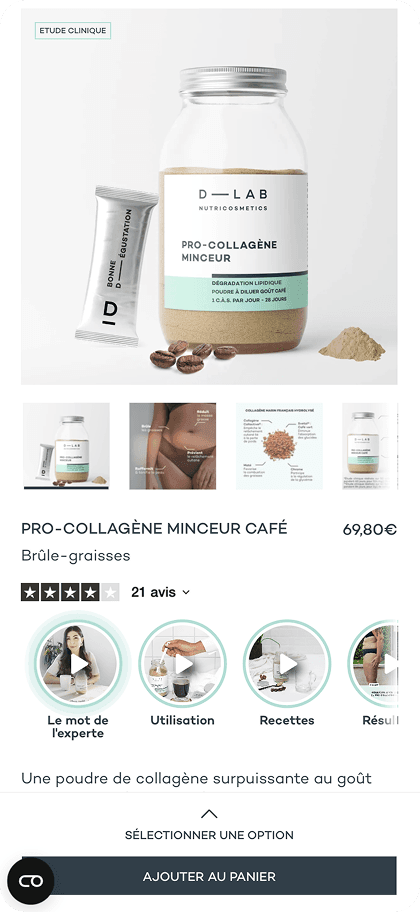
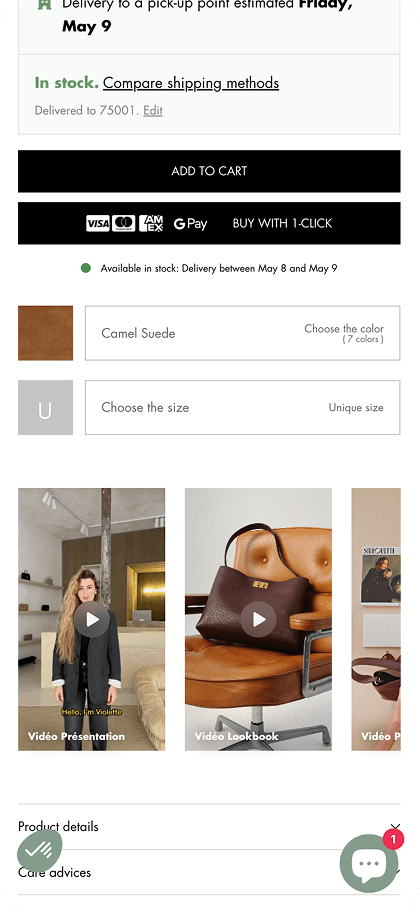
Integrating shoppable videos on product pages
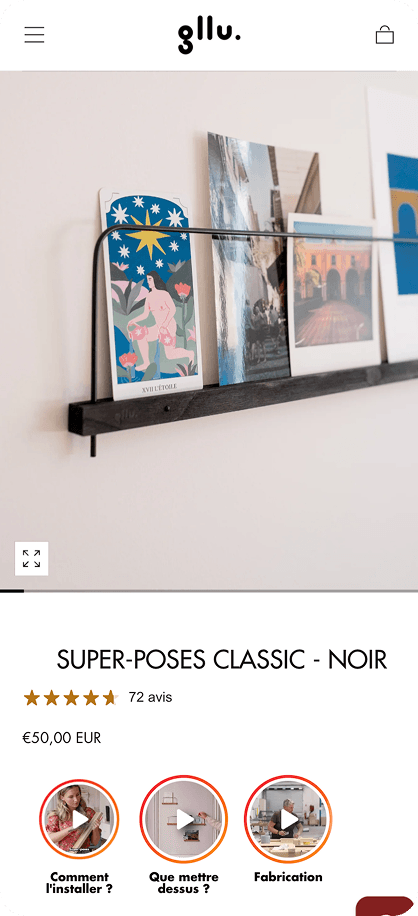
The product page is the ultimate conversion point. Replacing or complementing the static image gallery with shoppable videos transforms the page into an active demonstration space.
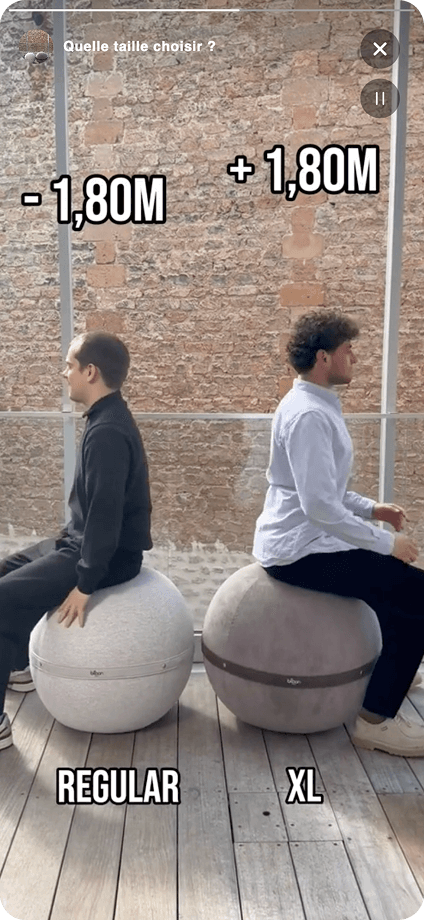
Concrete example: A furniture brand that integrates a PlayShorts video carousel for product explanation and demonstration.
- The content: A salesperson explaining the sofa's advantages
- The interaction: Interactive hotspots allow viewing the featured item
- Measurable result: An estimated 15-20% increase in conversions, as customers better perceive dimensions and materials.
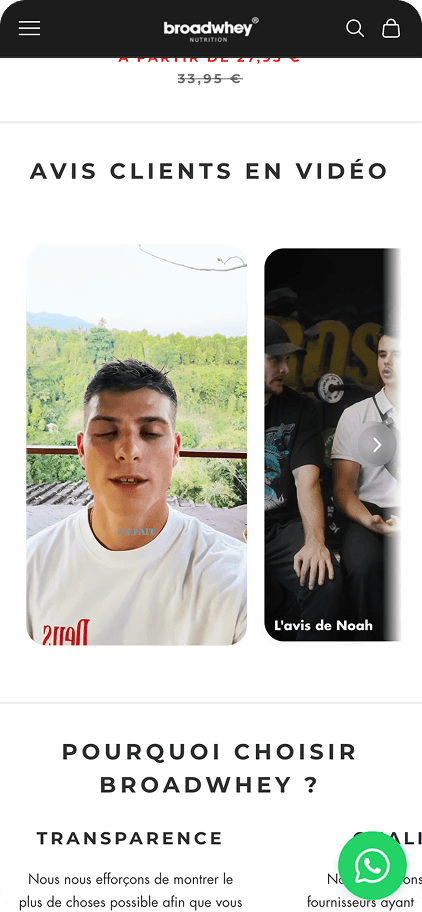
Integrating shoppable videos on your homepage
Your homepage is where customers discover your brand, its universe, and values. It's the first visual and emotional contact that can strongly influence their purchase decision.
Concrete example: A dietary supplement brand highlights customer reviews in video format to reassure visitors and establish legitimacy.
- The content: customer reviews presented as authentic interviews, where users share their real experience with the products.
- The interaction: an imposing and dynamic video carousel integrated on the homepage, allowing easy scrolling through multiple testimonials while staying captivated.
- Measurable result: A significant increase in time spent on the homepage as well as a notable improvement in conversion rate, thanks to enhanced trust brought by these video testimonials.
Integrating shoppable videos in blog articles
The blog is often underutilized in terms of direct conversion. It attracts traffic via SEO but struggles to transform readers into buyers. Integrating contextual videos changes the game.
Concrete example: A DIY store publishes a tutorial "How to install floating floor".
- The content: A step-by-step video showing the installation.
- The interaction: At each step where a tool or material is used (jigsaw, underlay, mallet), a discreet pop-up appears in the video allowing purchase of the exact tool used by the expert.
- Advantage: Educational content becomes a direct sales channel. The reader doesn't have to search for references; the solution is served at the moment they understand the need.
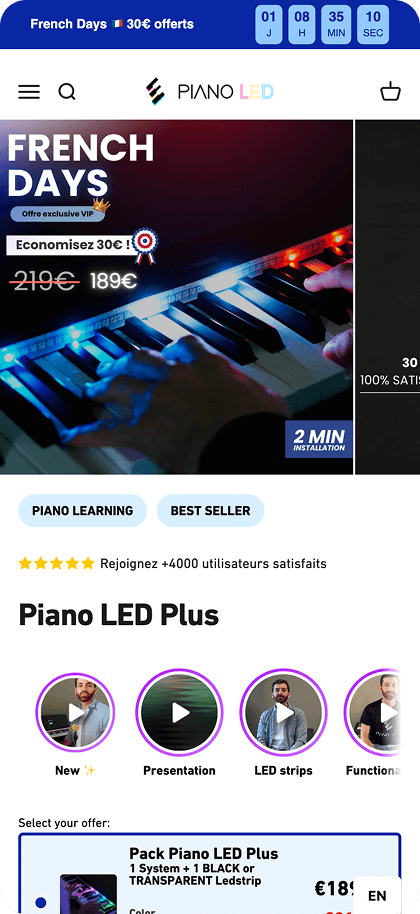
Integrating shoppable video in pop-up format
Integrating this format directly on the homepage via a widget or pop-up captures attention from the first seconds.
Concrete example: A supplement brand presents its different ranges.
- The content: A series of short videos (15 seconds) answering your visitors' questions
- The interaction: These videos appear as "bubbles" at the bottom of the homepage. By clicking, the video opens full screen with possible interactions.
- Performance: This format reduces bounce rate by immediately engaging the visitor upon arrival on your site
Integrating shoppable videos in emails
Email marketing remains a powerful channel, but click-through rates (CTR) on static images are plateauing. While video cannot be played directly in most email clients, using animated GIFs linked to a shoppable video landing page is a formidable strategy.
Concrete example: The email campaign from Pepin brand
- The content: An animated GIF in the email body showing products with a "Watch video" button.
- The interaction: The click redirects to a dedicated landing page generated by PlayShorts, where the video launches automatically with CTAs directly in the video.
- Impact: This approach can double the CTR compared to a static image, as it sparks curiosity and offers strong visual continuity between email and website.
Integrating shoppable videos
Internal development of an interactive video player compatible with all browsers and mobile devices is costly and time-consuming. It's therefore advisable to use specialized software in this field.
A solution like PlayShorts presents several key advantages:
- PlayShorts hosts videos on its own servers, preserving your site's loading speed.
- The back office is simple and intuitive, easily handled by marketing teams without technical skills.
- The solution is compatible with all major e-commerce platforms (Shopify, WooCommerce, PrestaShop, Magento, etc.), simplifying integration.
- Many features available: video integration on product pages, homepage, category pages, emails, pop-ups, QR codes, etc.
- An analytics dashboard to help you iterate on your video strategy
- Simple integration:
- Connect your product catalog with 1 click
- Import your videos
- Tag products directly on the video.
- Paste a single line of code on your site.
With PlayShorts, you benefit from high-performance technology, simple to deploy, that improves the shopping experience without slowing down your site.
Read more
Ready to take action? Follow our step-by-step guide to integrate shoppable videos on your site. Also discover the Molleni case study and the before/after impact of shoppable video on conversions.
To find video content to integrate, leverage UGC videos from your customers. It's the most authentic and best-performing format in ecommerce.
Also worth reading: secrets of an ecommerce video that converts and best Shopify video tools.