How to Increase Shopify Conversion Rate in 2026
In 2026, the battle for consumer attention reaches unprecedented heights, making the optimization of your online store more critical than ever.
It's no longer enough to simply attract traffic; you must transform every visitor into a loyal customer through a surgical strategy and innovative tools.
This article unveils a technical and actionable roadmap to increase your Shopify conversion rate and propel your revenue.

Understanding Shopify Conversion Rate in 2026
The conversion rate isn't just a vanity metric; it's the key performance indicator (KPI) that determines the economic viability of your business.
In 2026, understanding the nuances of this figure is the first step to structuring profitable growth.
What is conversion rate and why is it essential for maximizing your results
The conversion rate represents the percentage of visitors who complete a desired action (generally a purchase) relative to the total number of visitors.
Mathematically, if you have 1,000 visitors and 20 sales, your rate is 2%. The financial impact of even a minimal variation in this rate is often underestimated by e-merchants.
To illustrate the colossal leverage effect of conversion rate optimization (CRO), let's take the example of a store generating 50,000 monthly visitors with an average order value of €60.
The stakes of optimization in 2026: new trends and challenges to tackle
The e-commerce landscape in 2026 is marked by increased volatility in user attention.
Visitors have become more difficult to capture, more skeptical, and infinitely more solicited.
The average attention time on a product page has dropped below 8 seconds, making traditional conversion methods (long texts, static images) less and less effective.
Today, conversion is an increasingly difficult subject because it relies on two major pillars:
- A strong brand identity: Consumers no longer just buy a product, but membership in a universe. A store without soul or generic will see its acquisition costs explode.
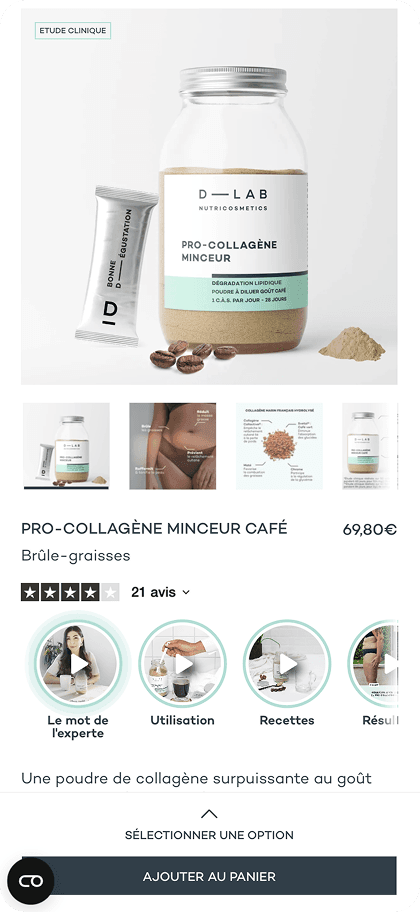
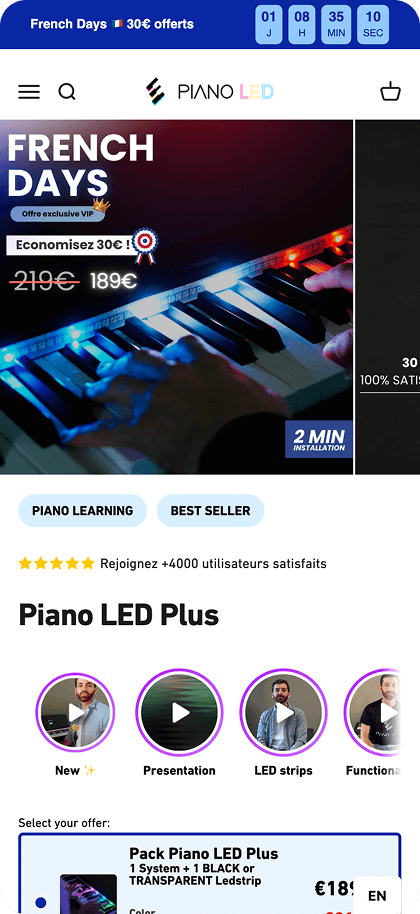
- Immediate immersion: This is where the revolution of video ecommerce integration comes in. The arrival of solutions like PlayShorts has changed the game by allowing the integration of "webstories" formats (Stories or Reels type) directly on product pages.
Faced with constantly rising advertising costs (CPM) on social platforms, your site must be a converting machine.
The challenge is no longer technological, it's experiential: how to deliver crucial information in less than 3 seconds while creating an emotional connection? The answer lies in adopting dynamic visual formats that retain the user from arrival.

Optimizing user experience and strengthening your store's credibility
User experience (UX) is the foundation on which any conversion strategy rests. In 2026, fluid UX is no longer a luxury, it's an absolute technical prerequisite to hope to sell.
Improving navigation for a fluid and intuitive experience
Simplifying the customer journey is the absolute priority. Every superfluous click is an exit opportunity for the visitor. Optimized navigation must guide the user to the cart with minimal friction.
To do this, focus your efforts on the area above the fold (the visible part of the screen without scrolling). This is where 80% of the decision to stay or leave is made.
- Visual hierarchy: Essential information (title, price, add to cart button) must be immediately visible.
- Quick understanding of benefits: Use impactful bullet points rather than text blocks. The customer must understand "what they gain" at a glance.
- Visual richness: Offer several high-quality photos from different angles.
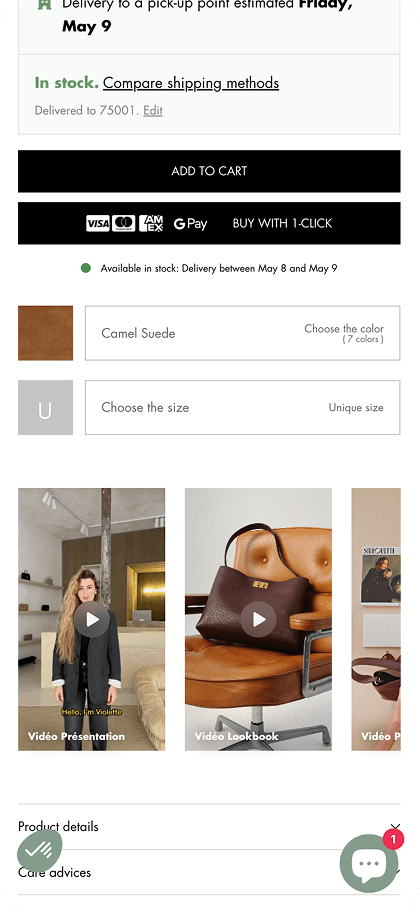
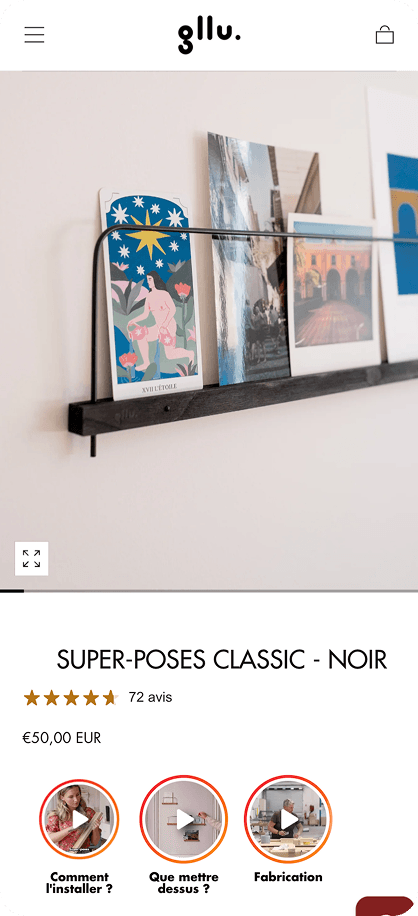
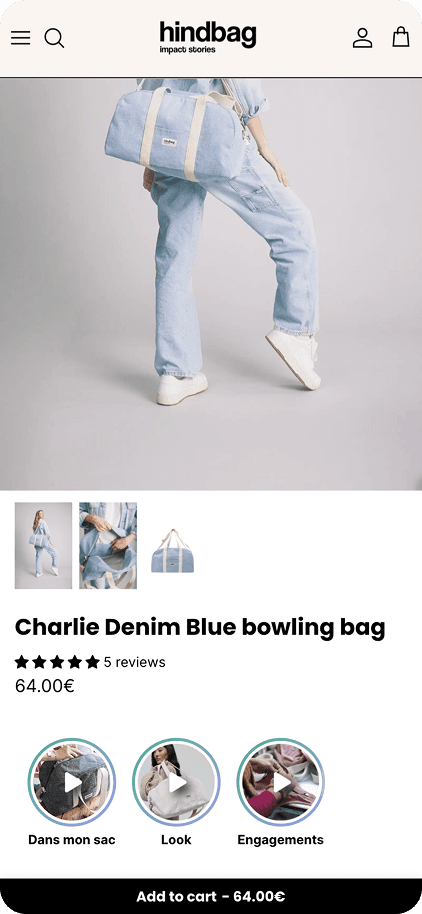
- Strategic video integration: Using a tool like PlayShorts allows you to integrate video stories directly under the product title. This allows the customer to see the product in motion, worn or used, without leaving the page, drastically increasing immediate engagement.
Ensuring optimal loading speed and perfect mobile compatibility
The loading speed is a non-negotiable technical factor. According to Google standards (Core Web Vitals), a loading time exceeding 2.5 seconds increases the bounce rate by more than 30%. In 2026, with the predominance of 5G networks, users have no tolerance for latency.
Why is speed so important?
- SEO impact: Google severely penalizes slow sites in its ranking.
- Conversion impact: Each second of delay reduces conversion rate by 4.42% on average.
- Mobile experience: More than 70% of Shopify traffic comes from mobile. Your theme must be "Mobile First," with touch elements (buttons, menus) sized for the thumb and scripts optimized not to block page rendering.

Integrating social proof and customer reviews for reassurance
Social proof acts as a powerful psychological lever. In a digital environment where touch is impossible, others' opinions replace sensory experience.
To maximize impact:
- Display the overall rating (stars) right next to the price.
- Integrate reviews with photos or videos (User Generated Content).
- Use applications that allow filtering reviews by attributes (size, color, skin type) to help prospects identify.
Highlighting security and guarantees to inspire confidence
The objective is to erase any barrier to purchase. Doubt is the enemy of the transaction.
From the product page to checkout, trust signals must be visible.
- Security badges: Clearly display secure payment logos (Visa, Mastercard, PayPal, Apple Pay).
- Explicit guarantees: Mention "Satisfied or refunded within 30 days" or "2-year warranty" near the call-to-action (CTA) button.
- Customer support: The presence of live chat or a mention "Responsive customer service 7/7" reassures the customer that they won't be left alone in case of problems.
Creating product pages and offers that convert
Your product page is your 24/7 salesperson. It must be persuasive, clear, and technically flawless to transform interest into purchase.
Optimizing visuals and descriptions to captivate your visitors
The golden rule for descriptions in 2026 is to keep it simple. Avoid incomprehensible technical jargon unless your audience is expert. Focus on value proposition: describe concrete benefits and specific problems your product solves.
- Structure the text: Use H4 titles, bullet lists, and bold to facilitate diagonal reading (skimming).
- Clean and polished visuals: Image quality reflects product quality. If you use AI to generate or retouch visuals, ensure you have quality content. An AI-generated image with visible defects (artifacts, inconsistencies) will instantly destroy your credibility. Always favor real photos or hyper-realistic 3D renders.
Offering strategically targeted promotions and purchase incentives
Promotions shouldn't devalue your brand but create urgency or a sense of opportunity.
- Time-limited offers: A discreet countdown for same-day shipping can encourage immediate action.
- Bundles (Packs): Offer a 10% discount for purchasing two complementary products. This increases perceived value while preserving your margins.
Mastering upselling and cross-selling to maximize each sale
Increasing average order value (AOV) is the fastest way to increase profitability.
- Cross-selling: On the product page, propose "Frequently bought together" items. For example, batteries for an electronic toy or maintenance product for leather shoes.
- Upselling: Suggest a premium version of the product or a larger format offering better quantity/price ratio. Integration must be natural and not interrupt the purchase flow.

Streamlining the purchase journey and minimizing cart abandonment
The checkout tunnel is the critical stage where you lose the most potential customers (about 70% on average). Streamlining this step is imperative.
Designing effective calls-to-action that encourage action
Your call-to-action (CTA) buttons must be impossible to ignore.
- Contrasting color: The button must visually stand out from the rest of the graphic charter.
- Action-oriented wording: Prefer "Get my offer now" or "Add to cart - 24h shipping" to a simple "Buy".
- Positioning: On mobile, the CTA must be "sticky" (fixed) at the bottom of the screen to remain accessible regardless of the page scroll level.
Simplifying the ordering process for frictionless completion
Transparency is key to avoiding unpleasant surprises at payment time.
- Explain delivery times: Be precise. "Delivery between June 12 and 14" is much better than "Delivery within 3 to 5 days".
- Explain shipping prices: Display fees as soon as possible.
- Shipping upsell tips: Add a dynamic counter in the cart or drawer showing: "Only €14 more for free shipping". This is a formidable technique to push upsell and increase average order value.
- Pickup point choices: In France, the pickup point option (Mondial Relay, Chronopost) is popular. Integrating it via dedicated Shopify apps is essential.
- Return policy: A clear link to a simple return policy reassures hesitant buyers.
Reactivating abandoned carts with personalized strategies
Despite your efforts, carts will be abandoned. Reactivation is your safety net.
- Automated mailing: A sequence of 3 emails (at 1h, 12h, and 24h) allows recovering between 10% and 15% of lost carts.
- WhatsApp tool: In 2026, SMS and WhatsApp surpass email in open rates (98% vs 20%). Use WhatsApp automation tools to send a friendly and personalized reminder, possibly offering help or a 5% promo code to unlock the sale.
Boosting your conversions through targeted digital marketing
Traffic is useless if it's not qualified and engaged. Your marketing ecosystem must nurture conversion at every touchpoint.
Personalizing your email marketing campaigns for maximum impact
Email marketing remains the highest ROI channel, provided it's hyper-personalized.
- Advanced segmentation with Klaviyo: Don't treat all your subscribers the same way. Segment by behavior (VIP, recent buyers, inactive). Klaviyo allows creating ultra-precise flows based on purchase history.
- WhatsApp tools: Integrate WhatsApp into your marketing mix for transactional communications and VIP flash offers.
- Video mail integration via PlayShorts: Text alone is no longer enough. Integrating video previews (animated GIFs linked to stories) in your emails significantly increases click-through rate (CTR). PlayShorts allows generating these formats to energize your newsletters and present your new products in action directly in the inbox.
Engaging your audience on social media and with influencers
Conversion is useless without traffic, and activating your brand on social media is very important to create a constant flow of qualified visitors.
- UGC (User Generated Content): Push customers to create content about your brand (contests, hashtags). It's the most authentic form of advertising.
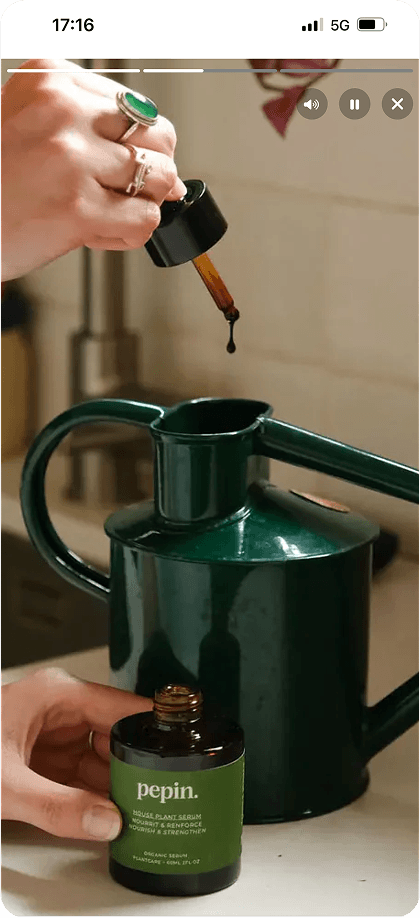
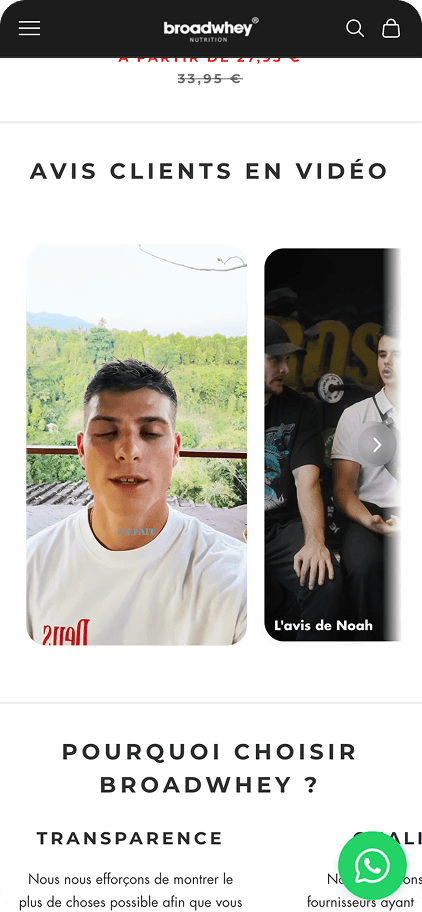
- Content reuse on your site: Don't let the best Instagram or TikTok videos disappear. Thanks to PlayShorts, you can import these contents created by your customers and display them on your Shopify site as "Stories" bubbles at the top of the page or on product pages. This creates perfect continuity between your social networks and your store, increasing trust and time spent on the site.

Attracting qualified traffic and converting through SEO
SEO (Search Engine Optimization) is your sustainable traffic source.
- Content strategy: Create educational content (blog articles, buying guides) that answers your personas' questions.
- Optimization for Google and AI: In 2026, AI-powered search engines (like ChatGPT Search or Google SGE) are changing the game. Your content must be structured, factual, and authoritative.
- Recommended tool: To generate SEO-optimized content at scale while maintaining human quality, tools like Blym.co have become essential for Shopify merchants wanting to dominate search results without spending their nights on it.
The data-driven approach: measure and optimize continuously
Intuition has its limits; data doesn't lie. A robust conversion strategy relies on continuous analysis.
Analyzing performance data to identify opportunities
Use the Shopify dashboard (and Google Analytics 4) to monitor your vital metrics daily:
- Conversion rate by device (Mobile vs Desktop).
- Add-to-cart rate.
- Checkout abandonment rate.
- Most profitable traffic sources.
This data tells you where the problem lies. If you have many cart additions but few purchases, the problem is at the shipping costs or payment methods level.
Implementing A/B tests to validate each optimization
Never change your entire site at once. Proceed by iterations.
- Test one variable at a time: button color, product title, or main image.
- Use tools like Shopify Collabs or third-party apps to split your traffic and see which version generates more revenue.
Identifying and eliminating friction points in the customer journey
Use behavioral analysis tools (heat maps, session recordings) to see how users actually navigate.
- Do they click on non-clickable elements?
- Do they stop scrolling before seeing your customer reviews?
- Do they encounter errors in forms?
Systematic elimination of these micro-frictions streamlines the journey and mechanically increases the conversion rate.
Conclusion: your roadmap to maximize your Shopify conversion rate in 2026
Increasing your conversion rate in 2026 requires a holistic approach, blending technical excellence and sales psychology. To succeed, your roadmap must focus on the essentials:
- Make your product pages easy to read: They must be clear, airy, and simple to understand.
- Work on your brand image: A strong identity is your best asset against competition and price wars.
- Integrate beautiful photos: Visual quality is the direct reflection of your product quality.
- Describe product benefits: Focus on the problems your product solves for the customer, not just its features.
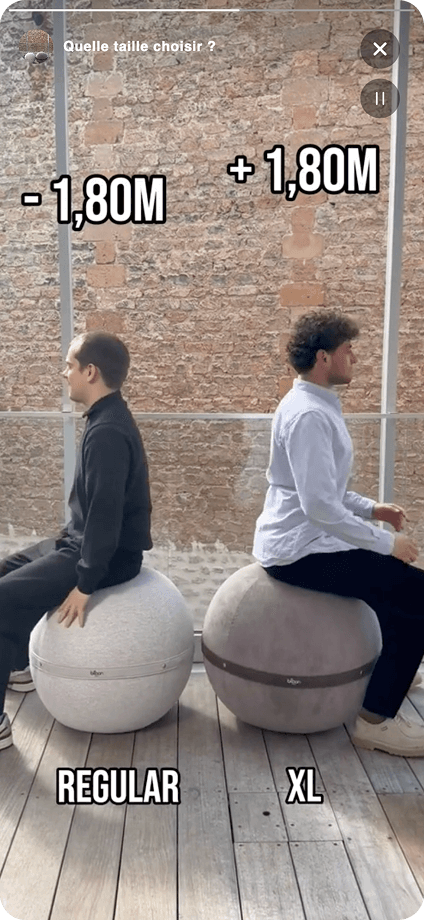
- Bet on video: Integrating videos like "stories" on your product pages via PlayShorts is one of the most powerful levers for 2026. Use them to explain your products, highlight authentic customer reviews, do product demos, or answer FAQs in video.
- Abandoned cart recovery: Don't let any prospect leave without trying to win them back via email or WhatsApp.
By applying these strategies rigorously, you'll transform your Shopify store into a true growth engine.
Frequently asked questions about Shopify conversion rate optimization
How to effectively increase my Shopify conversion rate?
Integrating videos on your product pages is a simple and formidable way to help customers project themselves and explain benefits in seconds. Customers don't like reading long texts but love video; using a tool like PlayShorts allows responding to this need for immediacy and boosting engagement.
Why does my conversion rate remain low despite my efforts?
If your store is technically sound, the problem is often fundamental: has your product been validated by the market and does it respond to a strong enough "pain" (problem) for your target customer? Sometimes, the offer itself or price positioning must be reevaluated before blaming the site design.
What are the best strategies to improve my conversions?
Beyond speed and trust, one of the best current strategies is integrating video above the fold via PlayShorts. Capturing attention from the first second with a dynamic visual format reduces bounce rate and encourages visitors to discover your offer.
What conversion rate should I target for a high-performing Shopify store?
It's crucial to position yourself against market benchmarks:
- Shopify global average: about 1.4% to 1.8% of visits convert to purchase.
- "Reasonable" or "good start" range: generally ~2% to 3% is often considered a good base to achieve profitability.
- High performance level:
- 3.2% or more: you're among the top 20% of Shopify stores.
- 4.7% or more: you're among the top 10%, an excellent level.
Read more
Video is the most powerful conversion lever in ecommerce. Discover the measured impact of shoppable video on conversions with the Molleni case, and check our video popup ideas to capture attention from the first visit.
To choose the right tool, check our best Shopify video tools comparison. And to fuel your videos with high-performing content, leverage the 6 UGC video formats that turn visitors into buyers.